India A Produce Complete Team Performance to Seal Final Berth
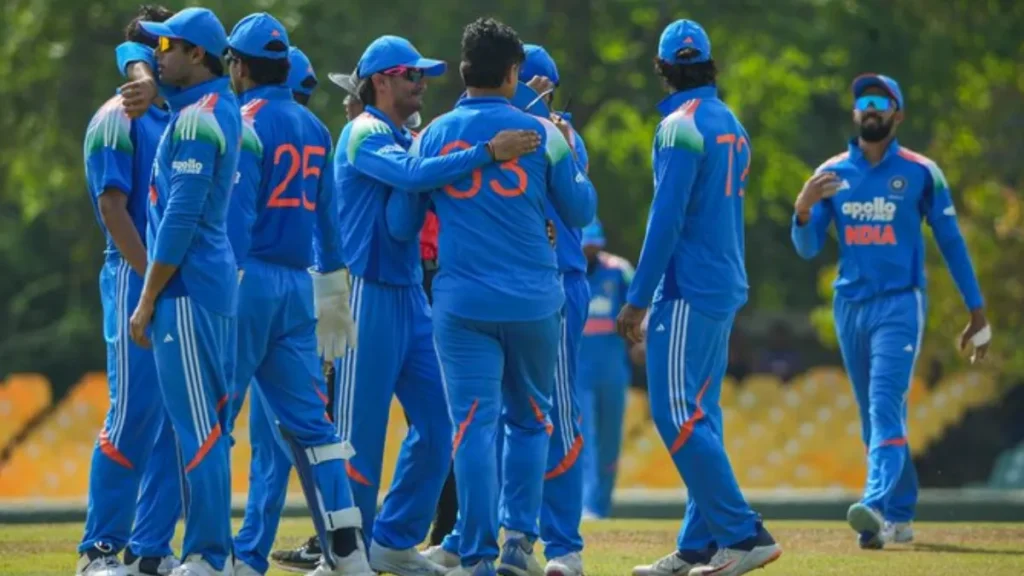
India A vs Afghanistan A: India A booked their place in the final of the Tri-Nation A Series with a convincing 101-run victory over Afghanistan A in a match that showcased the depth of India’s emerging cricket talent. Powered by half-centuries from Priyansh Arya, captain Tilak Varma and wicketkeeper-batter Kumar Kushagra, India A posted an imposing total of 319 for 9 before their bowlers dismantled Afghanistan A for 218 in 36.5 overs.
The result highlighted India’s strength in both departments. After setting a challenging target, the bowlers ensured Afghanistan A never gained sustained control of the chase despite showing early promise. Left-arm all-rounder Nishant Sindhu starred with the ball, claiming four wickets and playing a decisive role in turning the match in India’s favour.
With this victory, India A secured a place in the tournament final and sent a strong message about the quality of players waiting in the wings of Indian cricket.
INTO THE FINALS 👏
— BCCI (@BCCI) June 17, 2026
India A clinch a magnificent 1️⃣0️⃣1️⃣-run win over Afghanistan A to book their spot in the finals of the #TriNationSeries 💙
Scorecard ▶️ https://t.co/Kg9IWt7M5b#INDAvAFGA pic.twitter.com/kZ6YL4ngod
Afghanistan A Opt to Bowl First After Winning Toss
Afghanistan A captain Imran Mir won the toss and chose to field first, hoping his bowlers could make use of the early conditions and restrict a strong Indian batting lineup.
India A entered the contest with a squad featuring several highly rated young cricketers, including Priyansh Arya, Vaibhav Suryavanshi, Ruturaj Gaikwad, Tilak Varma, Kumar Kushagra, Nishant Sindhu, Suryansh Shedge, Vipraj Nigam, Anukul Roy, Anshul Kamboj and Yash Thakur.
Afghanistan A fielded a competitive side led by Imran Mir and featuring Hasan Isakhil, Khalid Taniwal, Bahir Shah, Farmanullah Safi, Shams Ur Rahman, Mohammad Ishaq, Zaheer Khan, Abdullah Ahmadzai, Faizal Khan Ahmadzai and Faridoon Daudzai.
What followed was an entertaining contest in which India A gradually took control through disciplined batting and clinical bowling.
Aggressive Start Gives India A Early Momentum
India A‘s innings began in positive fashion as openers Priyansh Arya and Vaibhav Suryavanshi attacked the Afghanistan bowlers from the outset.
The pair found boundaries regularly and ensured the scoring rate remained healthy during the powerplay. Afghanistan’s bowlers struggled to contain the aggressive intent shown by the Indian batters, who capitalized on loose deliveries and rotated the strike effectively.
Suryavanshi looked particularly confident during his stay at the crease. The young batter played several attractive strokes and helped India A race to a strong start before becoming the first wicket to fall.
He was dismissed for 38 runs in the eighth over, ending an opening stand that laid a solid platform for the innings. At that stage India A had already moved beyond 75 runs and appeared well positioned for a big total.
Priyansh Arya Continues His Impressive Form
While Suryavanshi departed after a promising innings, Priyansh Arya continued to dominate the Afghanistan attack.
The left-handed batter mixed aggression with smart shot selection, ensuring the scoring rate never dipped. He found gaps regularly and punished anything short or overpitched.
Arya reached his half-century in quick time and looked set for an even bigger score before eventually being dismissed for 58 runs from just 42 deliveries. His innings featured a blend of timing and power and provided India A with the momentum needed during the first half of the innings.
By the time Arya was dismissed, India A had crossed the 100-run mark and remained firmly in control.
His contribution once again underlined why he is regarded as one of the exciting batting prospects in domestic cricket.
Ruturaj Gaikwad Adds Stability in Middle Overs
Experienced top-order batter Ruturaj Gaikwad played an important supporting role after the early breakthroughs.
While Arya attacked, Gaikwad focused on maintaining stability and ensuring India A did not lose wickets in clusters. He rotated the strike effectively and kept the innings moving during a crucial phase.
Gaikwad scored 30 runs before being dismissed, but his contribution helped bridge the gap between the aggressive opening partnership and the middle-order rebuild that followed.
When he departed, India A were 143 for 3, leaving the responsibility of accelerating the innings to captain Tilak Varma and wicketkeeper Kumar Kushagra.
Tilak Varma and Kumar Kushagra Rebuild the Innings
One of the defining phases of the match came through the partnership between Tilak Varma and Kumar Kushagra.
After losing three wickets, India A needed a measured response. Rather than taking unnecessary risks, the duo focused on rebuilding while keeping the scoreboard moving.
Their partnership combined patience and calculated aggression. They rotated strike consistently, ran hard between the wickets and punished scoring opportunities whenever Afghanistan’s bowlers missed their lines.
At the halfway stage of the innings, India A had reached 175 for 3, and the partnership continued to grow in confidence.
The pair gradually shifted gears and began targeting boundaries more frequently, placing Afghanistan’s bowlers under increasing pressure.
Kumar Kushagra Anchors the Middle Order
Kumar Kushagra played a mature innings that highlighted both his temperament and technical ability.
The wicketkeeper-batter absorbed pressure during the rebuilding phase before accelerating when the situation demanded. He reached his half-century from 60 deliveries and provided the stability India A required.
Kushagra’s 58-run knock proved particularly valuable because it came during a stage when Afghanistan were searching desperately for breakthroughs.
His ability to rotate strike ensured India A maintained momentum throughout the middle overs.
Though he eventually departed after a well-made fifty, his contribution laid the foundation for the strong total that followed.
Captain Tilak Varma Leads From the Front
Captain Tilak Varma once again demonstrated why he is considered one of India’s brightest young leaders and batters.
Coming in after early wickets, Tilak assumed responsibility for guiding the innings. His approach balanced caution with aggression, allowing him to construct a vital innings without exposing the lower order prematurely.
The left-hander reached his half-century through a series of well-timed strokes and intelligent shot selection.
Tilak eventually scored 59 runs, narrowly missing out on a bigger milestone, but his innings was arguably the most influential contribution of the match.
By the time he was dismissed, India A had crossed 270 runs and were in position to push beyond the 300-run mark.
Late Collapse Fails to Prevent India A From Crossing 300
Although India A were in excellent shape heading into the final overs, Afghanistan A fought back with a series of late wickets.
The Indian side lost several batters during the closing stages, including Tilak Varma, Vipraj Nigam, Anukul Roy and Anshul Kamboj.
Despite the late collapse, the groundwork laid by the top and middle order ensured the total remained highly competitive.
India A eventually completed their 50 overs on 319 for 9.
Given the nature of the pitch and the pressure associated with a must-win contest, the score represented a significant achievement.
Afghanistan Bowlers Share Wickets
Afghanistan A’s bowlers endured a difficult day overall but produced encouraging moments during the latter stages of the innings.
Faridoon Daudzai, Farmanullah and Abdullah Ahmadzai each picked up two wickets.
Faridoon accounted for Vaibhav Suryavanshi and Kumar Kushagra, while Abdullah dismissed both Ruturaj Gaikwad and Tilak Varma.
Farmanullah removed Priyansh Arya and Vipraj Nigam.
Their efforts helped prevent India A from posting an even larger total, but the target of 320 still appeared daunting.
Afghanistan A Begin Chase Aggressively
Chasing 320 for victory, Afghanistan A made an aggressive start that briefly raised hopes of a successful pursuit.
Openers Imran Mir and Hasan Isakhil attacked the Indian seamers from the beginning and raced to 25 runs within the first three overs.
Hasan in particular looked dangerous. The batter struck boundaries confidently and appeared determined to take advantage of fielding restrictions.
However, India A struck at the right moment.
Yash Thakur dismissed Hasan for 14 runs, providing the breakthrough India desperately needed.
Although Afghanistan had lost a wicket, their aggressive intent remained evident.
Early Partnerships Keep Afghanistan in the Contest
Following Hasan’s dismissal, Imran Mir and Khalid Taniwal continued to score at a healthy rate.
Afghanistan crossed 45 runs within five overs and appeared capable of mounting a serious challenge.
However, India’s pace attack continued asking questions.
Anshul Kamboj removed Khalid Taniwal for 13 runs, reducing Afghanistan’s momentum.
The dismissal brought additional pressure onto the batting side, but captain Imran Mir responded positively.
He played several attacking shots and attempted to keep the required run rate under control.
Nishant Sindhu Delivers Crucial Breakthrough
The turning point began when Nishant Sindhu entered the attack.
The left-arm spinner produced a disciplined spell and dismissed Afghanistan captain Imran Mir for 32 runs.
The wicket was significant because Imran had looked capable of anchoring the chase.
At the end of ten overs, Afghanistan A were 71 for 3. While the scoring rate remained healthy, losing three top-order wickets had shifted the balance toward India.
Sindhu’s breakthrough provided India A with renewed confidence and started a sequence of wickets that Afghanistan never fully recovered from.
Bahir Shah and Faizal Build Resistance
To their credit, Afghanistan A refused to surrender.
Bahir Shah and Faizal worked hard to rebuild the innings and gradually reduced the pressure through a valuable partnership.
The pair rotated strike effectively and punished loose deliveries whenever opportunities arose.
By the 20-over mark, Afghanistan had reached 138 for 3, keeping hopes alive.
Both batters approached fifty and demonstrated impressive composure against a disciplined Indian attack.
For a brief period, the match appeared evenly balanced.
Anukul Roy Breaks a Promising Stand
Just as Afghanistan looked set for a sustained fightback, India A found another crucial breakthrough.
Faizal, who had played a valuable innings of 46 runs, was dismissed by Anukul Roy.
The wicket disrupted a productive partnership and once again increased the pressure on Afghanistan’s middle order.
Although Bahir Shah continued batting confidently, India sensed an opportunity to tighten their grip on the match.
Bahir Shah’s Fifty Not Enough
Bahir Shah completed a well-earned half-century and emerged as Afghanistan’s most successful batter.
He displayed excellent technique and patience while building his innings.
However, his dismissal for 57 runs proved another major setback.
Vipraj Nigam claimed the wicket, ending the innings of the batter who appeared most capable of taking the chase deep.
When Bahir departed, Afghanistan were 173 for 5 and facing an increasingly difficult task.
The required run rate continued rising, and India A’s bowlers were gaining momentum.
India Tighten Their Hold
After removing Bahir Shah, India A intensified the pressure.
Mohammad Ishaq attempted to revive the chase but managed only 16 runs before becoming Yash Thakur’s second victim.
Farmanullah also fell after scoring 17, leaving Afghanistan struggling at 200 for 7.
The lower order found it difficult to counter India’s disciplined bowling and energetic fielding.
Every wicket pushed Afghanistan further away from the target.
India’s bowlers maintained tight lines and lengths, refusing to offer easy scoring opportunities.
Nishant Sindhu Finishes With Four Wickets
Nishant Sindhu emerged as the standout performer with the ball.
The all-rounder consistently challenged Afghanistan’s batters and picked up wickets at crucial moments.
His dismissal of Abdullah Ahmadzai added another scalp to an already impressive spell.
Sindhu eventually finished with four wickets, making him one of the key architects of India’s victory.
His performance highlighted the growing depth of India’s spin-bowling resources and showcased his ability to influence matches in pressure situations.
Afghanistan Bowled Out for 218
The remaining Afghanistan batters were unable to produce a late rescue act.
India’s bowlers continued striking regularly, and the innings ended at 218 in 36.5 overs.
The final margin of 101 runs reflected India’s superiority across all phases of the game.
While Afghanistan displayed moments of attacking cricket and resilience, they ultimately lacked the partnerships required to chase a target of 320.
India A, meanwhile, delivered a complete performance with contributions from multiple players.
What the Victory Means for India A
The result carries significance beyond a single win.
For India A, tournaments such as the Tri-Nation Series serve as an important platform for identifying future international cricketers. Strong performances from players like Priyansh Arya, Tilak Varma, Kumar Kushagra and Nishant Sindhu strengthen their cases for higher honours in the future.
The match also demonstrated the balance within the squad. Different players stepped up at different stages, whether with the bat, ball or in the field.
Such depth is often the hallmark of successful teams.
Reaching the final gives India A an opportunity to compete for silverware while allowing selectors and coaches another chance to assess emerging talent in competitive conditions.
Also read: Vipraj Nigam Incident Explained: Why India A Was Penalized 10 Runs Against Sri Lanka A
Match Summary: India A Vs Afghanistan A
India A produced an all-round display to defeat Afghanistan A by 101 runs and qualify for the Tri-Nation A Series final. Half-centuries from Priyansh Arya (58), Tilak Varma (59) and Kumar Kushagra (58) powered India A to 319 for 9 in 50 overs. In reply, Afghanistan A started positively but lost momentum after regular wickets. Bahir Shah’s 57 and Imran Mir’s 32 offered resistance, but Nishant Sindhu’s four-wicket haul and strong support from the rest of the bowling attack ensured Afghanistan A were bowled out for 218 in 36.5 overs. The comprehensive victory underlined India’s dominance and secured their place in the tournament final.