The International Cricket Council (ICC) has taken disciplinary action against India batter Yashasvi Jaiswal and Sri Lankan fast bowler Asitha Fernando following their heated exchange during the Colombo Test. Both players have been fined 25% of their match fees and have received one demerit point each after an incident that saw the two players make physical contact on the field.
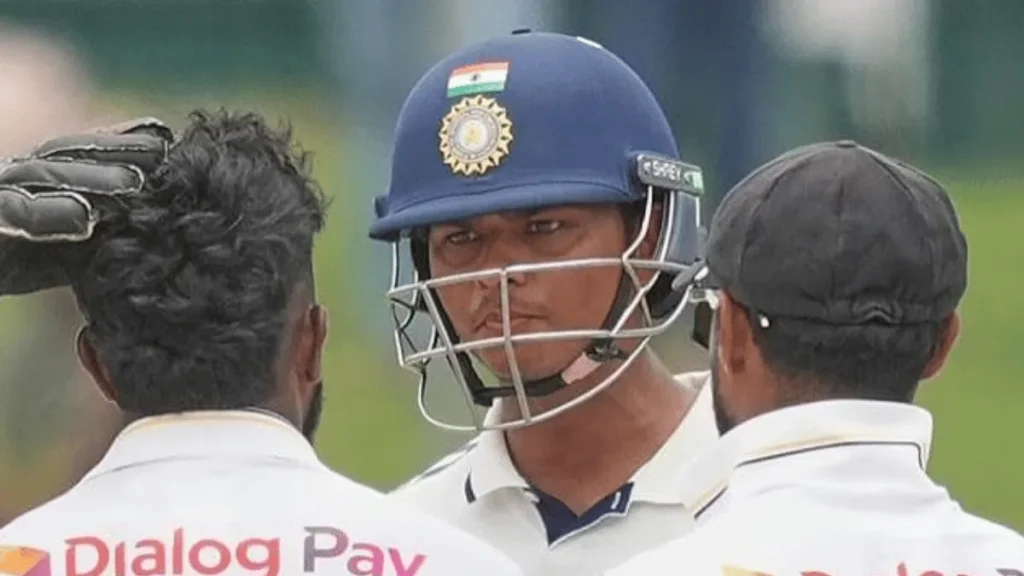
The incident occurred on the opening day of the second Test between India and Sri Lanka in Colombo. The confrontation came shortly after Fernando dismissed Jaiswal during India’s innings. What began as a verbal exchange quickly became more intense when the two players moved towards each other and their heads made contact.
Both Jaiswal and Fernando accepted the charges brought against them and agreed to the punishment proposed by ICC Match Referee Andy Pycroft. Since both players admitted the offence and accepted the sanction, there was no requirement for a formal hearing.
🥵 THINGS GET HEATED! 🥵
— Sony Sports Network (@SonySportsNetwk) August 23, 2026
Yashasvi Jaiswal and Asitha Fernando exchange words as tensions rise in the middle. 👀
Watch #SLvIND, 2nd Test, LIVE NOW on Sony Sports Network TV channels & Sony LIV.#SonySportsNetwork #SonyLIV #BeautifulGameOfTestCricket pic.twitter.com/7qJrORjx8V
What Happened Between Yashasvi Jaiswal and Asitha Fernando?
The incident took place during the 17th over of India’s innings. Fernando dismissed Jaiswal, after which the Indian batter walked towards the Sri Lankan bowler. The two exchanged words for a brief period as tensions rose on the field.
Fernando then moved his head towards Jaiswal. Jaiswal also leaned towards Fernando, and the two ended up making contact with their heads.
The incident attracted immediate attention because physical contact between players is treated seriously under the ICC Code of Conduct. Although the confrontation did not develop into a prolonged physical altercation, the ICC considered the contact sufficient to warrant disciplinary action.
For the Yashasvi Jaiswal Asitha Fernando Colombo Test incident, the ICC charged both players under Article 2.12 of the ICC Code of Conduct. The provision deals with inappropriate physical contact involving a player, member of the support staff, umpire, match referee or another person connected with a match.
Both Players Accept ICC Punishment
The ICC confirmed that both Jaiswal and Fernando admitted to breaching the relevant provision of the Code of Conduct. They also accepted the sanctions recommended by match referee Andy Pycroft.
As a result, each player was fined 25% of his match fee and handed one demerit point. Because the players accepted the charges and proposed punishment, the matter did not proceed to a formal disciplinary hearing.
The one demerit point added to each player’s disciplinary record will remain relevant under the ICC’s system for a period of 24 months.
How Does the ICC Demerit Point System Work?
The ICC Code of Conduct does not normally impose an automatic one-year ban on a player simply because he receives a demerit point. Instead, demerit points accumulate over a 24-month period.
If a player collects four demerit points during that period, they are converted into two suspension points. Depending on the format and schedule, this can result in a player missing one Test match or two limited-overs matches.
The punishment becomes more serious when a player reaches eight demerit points within the same 24-month period. At that stage, the sanction can increase to two Test matches or four limited-overs matches.
This system is designed to track repeated disciplinary offences rather than treating every individual incident as an automatic long-term suspension.
What Are the Different Levels of ICC Offences?
The ICC Code of Conduct divides offences into different levels, with the punishment increasing according to the seriousness of the incident.
Level 1: Minor Offences
Level 1 offences include showing a degree of disagreement with an umpire’s decision, using inappropriate language or gestures, damaging the ball or cricket equipment, and celebrating a dismissal in an inappropriate manner.
The punishment can range from an official warning to a fine of up to 50% of the player’s match fee. A player may also receive one or two demerit points.
Level 2: Medium-Level Offences
Level 2 offences are considered more serious. They can include aggressive disagreement with an umpire’s decision, moving aggressively towards an opposing player or official, inappropriate physical contact, and serious verbal abuse or sledging.
Depending on the circumstances, the punishment can include a fine between 50% and 100% of the match fee, three or four demerit points, and a suspension of one Test or two ODI/T20 matches.
Level 3: Serious Offences
Level 3 violations involve more serious behaviour, including threatening an umpire, seriously intimidating another player, or making racist or highly personal remarks.
Such offences can result in five or six demerit points and a suspension ranging from two to four Test matches or four to eight limited-overs matches.
Level 4: The Most Serious Offences
Level 4 offences represent the most serious category under the Code of Conduct. They can include physical violence against a player, umpire or spectator, deliberately aggressive physical contact such as headbutting or pushing, and serious physical threats against a match official.
Punishment at this level can include seven or eight demerit points and a suspension of at least five Test matches or 10 ODI/T20 matches. In exceptionally serious circumstances, the punishment can even extend to a lifetime ban.
Jaiswal Responds After the Incident
Following his clash with Fernando, Jaiswal also addressed the controversy on social media. The Indian batter suggested that people should not rush to judge the incident without knowing what had been said to him during the exchange.
Jaiswal made the comment while responding to a video posted by cricket broadcaster Harsha Bhogle on the cricket website Cricbuzz. His message indicated that he believed there was more to the exchange than what viewers could see during the live broadcast.
Jaiswal’s response was firm, with the young Indian batter making it clear that he would not simply ignore it if an opponent crossed a line.
He said that if someone crosses a certain limit, a response becomes necessary. Jaiswal also expressed a strong competitive attitude, saying that this is India and that the team will fight and respond.
Also read: Ali Usman Takes Five Wickets at Headingley as England Build 195-Run Lead Against Pakistan
Colombo Test Incident Adds Tension to India-Sri Lanka Contest
The clash between Jaiswal and Fernando added another talking point to the Colombo Test. Cricket is known for its intense on-field battles, particularly when a fast bowler gets the better of an aggressive batter. However, the ICC regulations make it clear that competitive intensity cannot cross the line into inappropriate physical contact.
The 25% fine and one demerit point given to both players bring the incident to a close from a disciplinary standpoint, with neither player receiving an immediate suspension.
The Yashasvi Jaiswal Asitha Fernando Colombo Test controversy therefore remains a reminder that even brief moments of confrontation can have consequences under the ICC Code of Conduct. Both players accepted the punishment, allowing the focus to return to the cricket itself and the ongoing battle between India and Sri Lanka in Colombo.
Also read: Ind vs sl test: Yashasvi Jaiswal and Asitha Fernando Clash on the Field in Colombo, Watch Video